Originally published on LinkedIn. View the original post ↗
Still seeing devs post “AI can’t even count fingers / write regex” memes. That’s not skepticism. It’s denial.
AI is already part of the stack. If you’re not onboarding it with tools, prompts, and guardrails, you’re being left behind. Someone on your team is already using it and quietly compounding the gains.
On the flip side, Elon Musk says “code itself will go away” and that by the end of 2026 we might not even bother coding because AI will “create the binary directly.” Calm down.
The leap from “AI writes a lot of code” to “high-level languages disappear in a year” isn’t bold. It’s unserious.
The hard parts of software aren’t syntax. They’re trust and operations:
• Readability: Teams need diffs. Reviews. Refactors. Onboarding.
• Context limits: Real systems and their history don’t fit neatly into a prompt. Generating raw binaries doesn’t reduce complexity — it hides it.
• Debugging & observability: When prod breaks, you need traceable behavior, not a black-box executable.
• Security & verification: Provenance, reproducible builds, audits, compliance — all require inspectable artifacts.
The real shift isn’t downward to machine code. It’s upward: clearer specs, stronger tests, tighter feedback loops, better architecture.
If you’re reading these headlines and deciding it’s all hype, that’s a mistake. This is real. The leverage is real.
Integrate AI into your IDE. Into CI. Into review. Raise the bar on tests and validation, not lower it.
Memes won’t keep you employed. Ignoring the shift won’t ship software.
But developers who can wield these systems, constrain them, audit them, and take responsibility for the outcomes? They’re going to be very hard to replace.
Keep thinking.
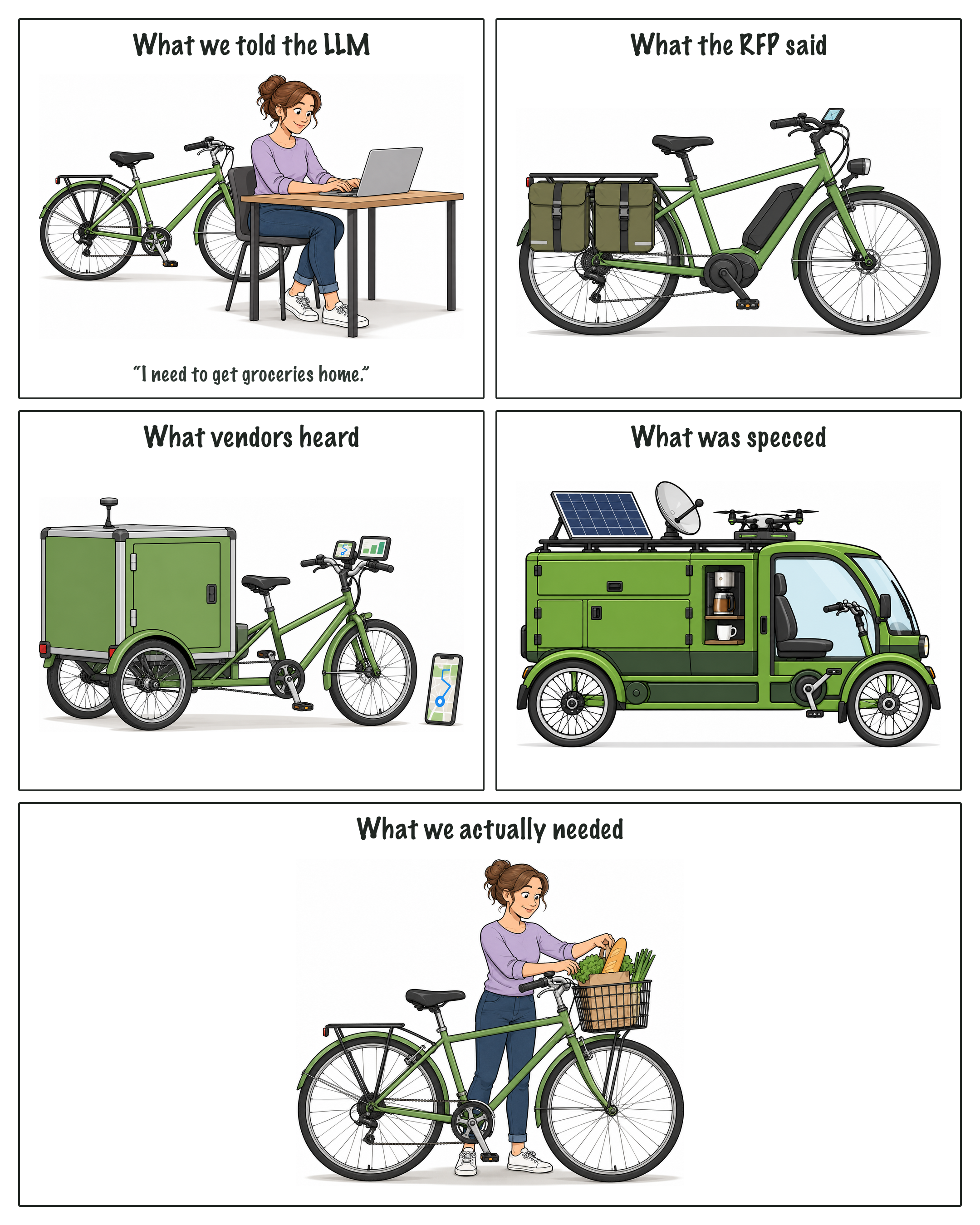
When AI-written RFPs inflate the scope
AI on both sides of procurement can turn suggestions into requirements. Quality discovery gives vendors a meaningful project and budget to price.
Your test strategy determines your speed limit
I've never played Go. I've played enough chess to appreciate its complexity, but Go is orders of magnitude more complex by possible positions. More than the number of atoms in the universe.