Originally published on LinkedIn. View the original post ↗
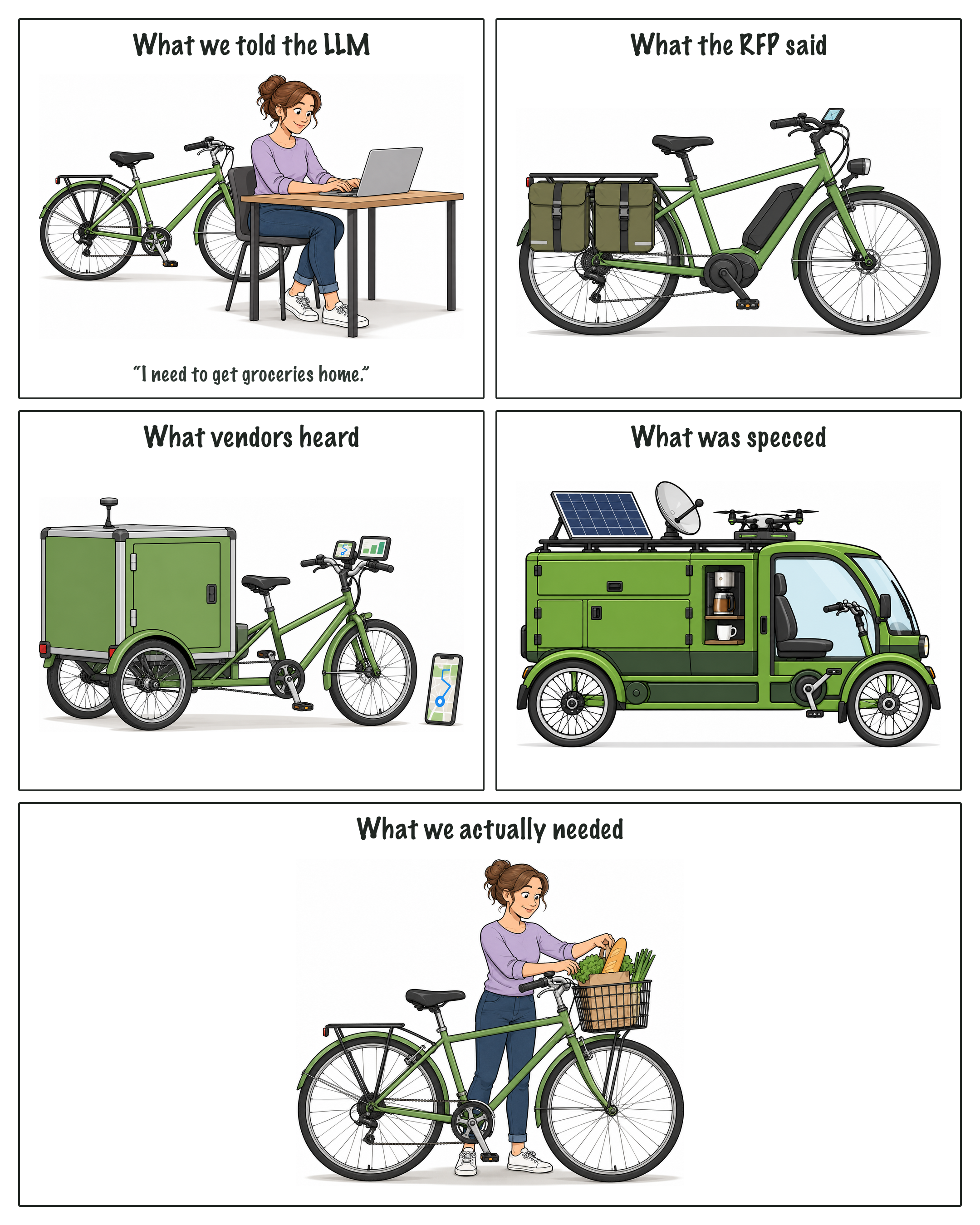
You have an LLM write your RFP. Your bidders use one to review it and draft their responses. In both cases, the LLM dutifully makes sure every requirement it can think of is tidily encased in the best practices it can conjure.
The result is often massive proposals that far outstrip the actual need.
An RFP is supposed to drive the price down through competition. Lately, I'm seeing it drive up costs via an LLM-induced scope-creep.
I'd start with a quality discovery process, working with a partner you trust to help give the project shape. Figure out what actually needs to be built, what can wait, and what it's likely to cost. That gives you a realistic budget to shape the first version.
If you then choose to run an RFP, you've got something meaningful for vendors to price, with the hard requirements and assumptions written down.
My bias here is obvious, but a properly-driven discovery session to scope out your 1.0 still yields the best results for most customers. If you need a partner to run that with you, give me a shout.